
When Metro Transit’s Green Line Extension finally opens to riders on June 12, 2027, it’ll add 16 new light rail stops west and south of Target Field in Minneapolis, stretching into St. Louis Park and Hopkins before skirting the eastern edge of Minnetonka on its way into Eden Prairie.
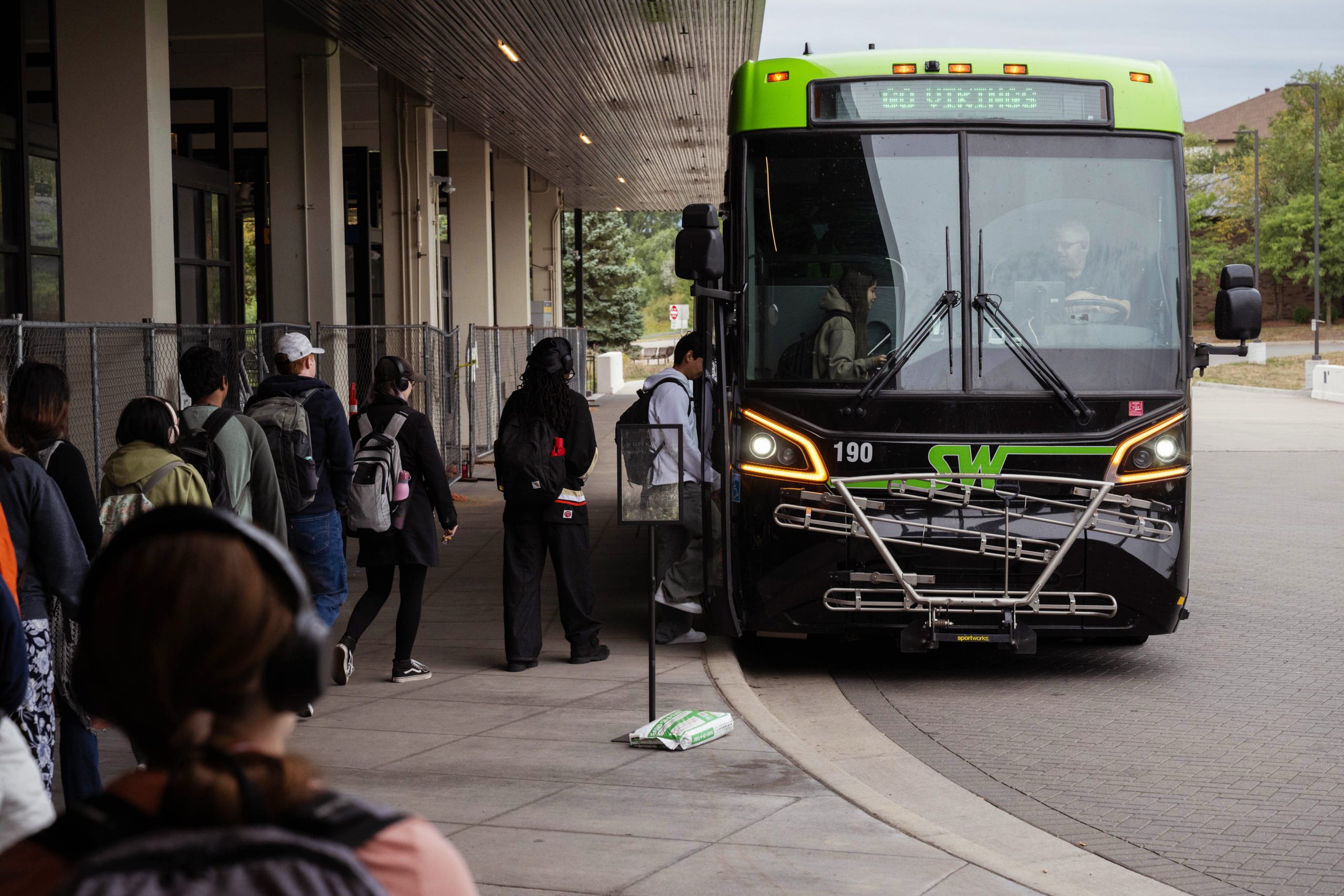
The Green Line’s new terminus will then be firmly within the operating area of SouthWest Transit, one of the Twin Cities’ four “opt-out” transit agencies that operate independently of Metro Transit (though still regulated by the Metropolitan Council).
But far from chafing at the intrusion on their turf, SWT officials say that when it comes to public transit in the suburbs, more means more. Both SWT buses and Green Line trains will depart from Eden Prairie’s SouthWest Station, and SWT CEO Erik Hansen said he suspects that more options for light rail will mean more demand for their buses.
Hansen’s optimism underscores a post-pandemic dynamic: While urban ridership has flagged, suburban ridership has flourished. “Our plan, candidly, is to expand service,” he said.
Community Voices: Bus rapid transit is a better alternative for the north metro
SWT has operated for 40 years under a joint powers agreement between Chaska, Chanhassen and Eden Prairie. Their primary routes serve largely to ferry passengers between the suburbs and downtown Minneapolis, with other routes aimed at getting from Eden Prairie to MSP or Mall of America.
Since 1986, the population of Eden Prairie has doubled, and Chaska and Chanhassen’s have each tripled. And business is good, Hansen said. Ridership data shows more than 614,000 trips in 2025, a 14% increase that pegs SWT as the fastest-growing transit agency in Minnesota.
SWT has looked on with interest as the Green Line has made its 16-year, $2.86 billion trek their way, and Hansen said conversations have been ongoing about how they can best work together. Those conversations will continue, he said, as the real impacts of the extension become clear and SWT determines how best to serve their riders’ needs.
In contrast to SWT’s growing ridership, Metro Transit’s light rail use has trended downward. Riders on the Blue Line took about 5,709,000 rides in 2025, down from about 6,529,000 in 2024. On the Green Line, they took about 7,542,000 trips in 2025, down from about 8,888,000 in 2024.
Those drops pale compared to what happened to public transit during and after the COVID-19 pandemic. In 2019, light rail ridership in the Twin Cities topped 25 million.
“We used to have this kind of commuting-oriented transit system,” said Jason Cao, a professor at the Humphrey School of Public Affairs at the University of Minnesota, where he studies transportation planning.
“Most of the transit-dependent people are really in these two central cities,” Cao said, referring to Minneapolis and St. Paul. “You know the transit investment will be heavily poured into those areas.”
Related: The Blue Line’s newest challenge? Where to find $279 million.
The general idea behind opt-out agencies like SWT, Cao said, is to serve suburban communities that may not feel the broader transit agency is getting them the services they need.
With the advent of the Green Line Extension, Cao said he could imagine various scenarios for SWT – maybe they’ll reduce bus frequency at some times and lean into their peak hours. (He cautioned that he hadn’t looked into this scenario specifically.)
He noted that many suburbanites will choose to drive longer distances to use park-and-ride facilities connected to light rail stations because of limited options for midday buses. A train that runs all day offers more flexibility if, say, a sick kid needs to be picked up during the school day.
At the state level, opt-out transit agencies have been facing questions of late about whether their existence stymies a potentially more equitable and economical regional transit system.
“In the last legislative session, consolidation of the opt-outs was a hot topic in the transportation committee,” said MJ Carpio, the executive director of Move Minnesota, a transit advocacy group.
It could create efficiencies in planning, Carpio said, to have one transit agency as opposed to five. But the bigger gains, she said, would come from promoting policies to increase density in cities like Minneapolis and St. Paul, making transit more efficient and more appealing.
That’s one of the benefits of light rail, she said – it encourages economic development along its path in a way that a bus doesn’t. Entrepreneurs “want to build where they know people will come,” Carpio said.
It’ll take time to see what develops along the Green Line extension. And for SWT, exactly what it means for their routes could take up to a year to determine, Hansen said. Regardless, they’re looking at expanding their on-demand transit options (consider, again, the parent rushing to pick up a sick child), including a pilot program around autonomous vehicles.
“We’re looking forward to it opening and seeing what’s going to happen,” Hansen said. “It’s exciting to have so much transit in the suburbs.”
The post Metro Transit’s Green Line Extension will open in June. Its competitors are … excited? appeared first on MinnPost.
Originally reported by MinnPost by Trevor Mitchell. Read the full story at the source.
Comments
No comments yet. Be the first to share your thoughts.
Leave a Comment